We’ve established just how vital asset utilization is to a firm’s success. But how do you get more visibility into it? How do you get it under greater control? And critically, where does RFID fit in? for more efficient operations.
Tip #1 — Use RFID Tags to Track Assets
A well-constructed RFID asset tracking system comprising RFID tags, readers, and software serves as a valuable tool for oil and gas firms, offering crucial insights to minimize disruptions and enhance financial predictability and overall performance.
RFID, or radio frequency identification, operates by utilizing electromagnetic fields to automatically track the location and movement of tags affixed to equipment, such as drill bits or pipe joints. This technology empowers field teams to read tags on each asset as they traverse from trucks to wellheads, facilitating seamless monitoring throughout the entire operational process.
Types of RFID Tags:
– Passive RFID Tags:
Passive tags draw their power from the RFID reader, making them a “simple apparatus.” These tags are known for their durability and versatility, capable of being applied to a wide range of oil and gas assets irrespective of environmental or working conditions.
– Active RFID Tags:
Active tags have their own power source, typically a battery. These tags are equipped with the ability to transmit signals over longer distances and are often employed in scenarios where real-time tracking with extended range is crucial.
– Embedded Tag Protection:
Both passive and active RFID tags can be embedded within equipment, providing additional protection against extreme temperatures, UV rays, rain, and other hazardous conditions. This ensures the longevity and resilience of the RFID tags in challenging environments commonly encountered in the oil and gas industry.
Implementing RFID asset tracking systems in the oil and gas sector enhances visibility into asset movement and contributes to proactive maintenance, inventory management, and overall operational efficiency. By leveraging RFID technology, oil and gas firms can make informed decisions, reduce downtime, and ultimately optimize their financial performance in this highly dynamic industry.
Tip #2 — Capture Real-Time Information
RFID tags, particularly active RFID tags, play a pivotal role in providing real-time visibility and tracking in the oilfield—an invaluable asset in an industry where downtime can result in significant financial losses, often costing thousands of dollars per minute.
– Rigging up Drill Pipes:
In the drill pipe lifecycle, RFID tags contribute significantly to managing expensive and heavily-used assets with substantial wear and tear, such as drill pipes. By affixing RFID tags to pipe ends, couplings, and joints, firms gain a deeper understanding of performance, longevity, and life cycle planning for these critical assets.
Traditionally, the inspection and maintenance of drill pipes have been labor-intensive and expensive. However, RFID asset tracking, particularly when integrated into a real-time location system (RTLS), transforms this process into a virtually instantaneous and highly efficient operation. With the right RFID tags, a firm can immediately access crucial information such as pipe location, movement, dimensions of individual joints, damage assessments, and inspection history.
This real-time insight is transformative, revolutionizing how firms monitor field assets and operations. The ability to swiftly gather comprehensive data allows for more predictable equipment investment planning and maintenance scheduling. By leveraging RFID technology, oil and gas companies can enhance their decision-making processes, reduce downtime, and ultimately optimize the performance and longevity of critical assets like drill pipes.
Tip #3 — Use Data to Build a Digital Twin of Your Operation
Absolutely, you’ve touched on a crucial point. The true value of RFID technology in asset tracking lies in gathering data and leveraging the insights gained to make informed decisions and drive actionable outcomes.
– Predictability in Downtime:
By analyzing RFID-generated data, oil and gas firms can identify patterns and trends that provide insights into the predictability of downtime cycles for specific assets. This enables proactive measures to be taken, such as optimizing maintenance schedules, reducing unplanned downtime, and ultimately enhancing overall operational efficiency.
– Optimizing Maintenance Windows:
RFID technology allows for the collection of serialized information linked to equipment and location. This data can be correlated to build a sophisticated digital twin of the organization—a virtual, data-based duplicate of all physical assets, processes, and systems. With this digital twin, firms can understand their asset landscape comprehensively, enabling them to make informed decisions about optimizing maintenance windows. Should maintenance be shortened, extended, or adjusted based on historical performance data? RFID insights contribute to making these decisions with precision.
– AI and Machine Learning Integration:
Going a step further, some organizations in the oil and gas industry are harnessing the power of RFID-generated information to train artificial intelligence (AI) and machine learning (ML) models. By feeding this data into advanced analytics systems, firms can develop predictive models that forecast various aspects of their business, such as equipment failures, maintenance needs, and even future demand patterns. This forward-looking approach allows companies to proactively address challenges and capitalize on opportunities, ultimately improving their business outcomes.
Tip #4 — Improve Safety & Compliance
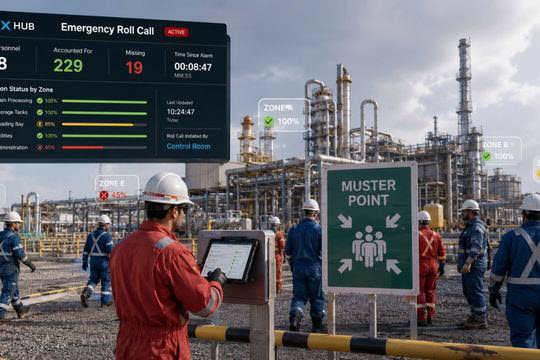
While RFID technology’s biggest boon is likely predictive asset maintenance, this kind of maintenance has significant implications for safety and compliance. When assets perform in predictable ways, workers stay safer.
Beyond direct safety, RFID technology can help track valuable information on individual worker training and certification, even for specific equipment or tasks.
Tip #5 — Optimize Equipment Performance
Scheduled maintenance is a linchpin for the seamless operation of oil and gas facilities. However, unexpected downtime caused by equipment failure remains a critical concern for firms in the industry. Rugged RFID tags designed for the harsh environments of oil and gas operations emerge as valuable tools in addressing this challenge.
These specialized RFID tags enable firms to track the aging process of assets over time, offering a particularly effective solution for critical components like pumps. The lifecycle of pumps is heavily influenced by the material they handle, making it essential to monitor their usage and degradation accurately. By tagging assets such as pumps with durable RFID tags, firms can meticulously track their utilization and assess the impact of this usage on their gradual degradation.
The ability to collect and analyze this data empowers organizations to accurately predict when equipment replacements will be necessary. This predictive maintenance approach not only helps prevent unexpected downtime scenarios but also allows firms to optimize the amount of backup equipment they need to keep on hand. Over the long term, it contributes to a comprehensive understanding of asset performance, unveiling valuable patterns and opportunities for resource-saving.
In essence, the integration of rugged RFID tags into oil and gas asset management not only enhances reliability by preventing unexpected downtime but also provides a foundation for strategic decision-making, ultimately optimizing operational efficiency and resource allocation.