

Know Which Bearing Is Failing, and How Long You Have
Register a machine’s rolling-element geometry once. From then on every vibration reading is checked against its calculated fault frequencies — BPFO, BPFI, BSF and FTF — classified against ISO 10816-3, scored for health and projected to a remaining useful life with a confidence band. All of it on-premise.
A Vibration Reading Is Not a Diagnosis
Most condition monitoring stops at a number going up. The chart trends, somebody notices, and the conversation becomes an argument about whether it means anything. Meanwhile the analyst who could read a spectrum retired, and the vendor software that came with the sensors exports a PDF nobody opens. Trend data without a fault model is just an expensive way to be surprised.
SmartX HUB computes the frequencies a specific bearing would fail at, from its own geometry, and matches measured spectra against them within tolerance. A match becomes a typed diagnosis with a confidence score — not an alert saying “vibration high”. From there the Criticality Matrix says whether this machine is worth interrupting production for, and one click opens a work order in work order management with a suggested failure code and the spare parts already proposed.
Calculated From Geometry, Not Guessed From a Trend
A rolling-element bearing fails at frequencies determined by its own geometry — outer race, inner race, ball and cage. Register that geometry once and the platform computes BPFO, BPFI, BSF and FTF for that specific bearing, then matches every measured spectrum against them within tolerance: ±5% on velocity, ±3% on envelope. The output is not "vibration is high". It is a named fault type with a confidence score, deduplicated per asset so the same condition does not re-fire on every polling cycle.
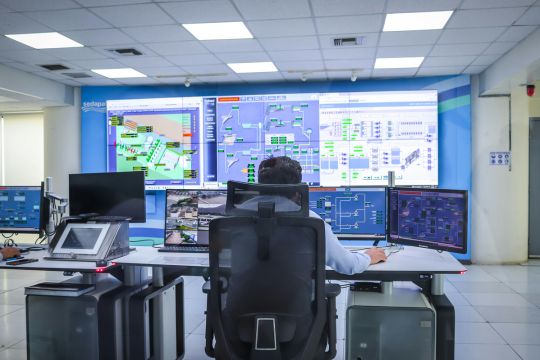
From Spectrum to Scheduled Shutdown
Condition monitoring only pays when it changes a decision. Each capability below links to the solution that carries that decision forward.
Stop Guessing at What the Chart Means
Condition monitoring earns its budget when it produces decisions, not dashboards. Five outcomes stand out.
The Analyst You No Longer Have
Reading a spectrum is a scarce skill and it is getting scarcer. These six exist so a plant without a resident vibration analyst can still act on what the data says.
Notification rules on zone change, new fault or RUL threshold feed the platform-wide alerting engine — deduplicated, so the same condition does not re-fire every cycle. See monitoring and alerts.
Guides for Reliability Teams
Where condition monitoring fits alongside the rest of the maintenance strategy.
Start with your ten worst machines
Register their bearing geometry, feed three months of readings, and see which ones the fault-frequency match flags. That list against your failure history is the whole argument.
Condition Monitoring — Common Questions
Answers to the questions we hear most from reliability and rotating-equipment teams evaluating condition monitoring with SmartX HUB. Have another question? Reach out through our support center.