RFID
Readers, antennas and handhelds
Fixed portals at doors and docks, plus Zebra handhelds for cycle counts and audits —
the setup ARASCO uses across 10,000+ high-value assets.
RFID
Tags and labels
Passive tags for assets, tools, pallets and garments, including hardened and on-metal
variants for industrial surfaces.
BLE · UWB
Anchors and active tags
Battery-powered tags with anchor infrastructure for continuous location, where knowing
the zone is not enough and you need the position.
Sensors
Environmental monitoring
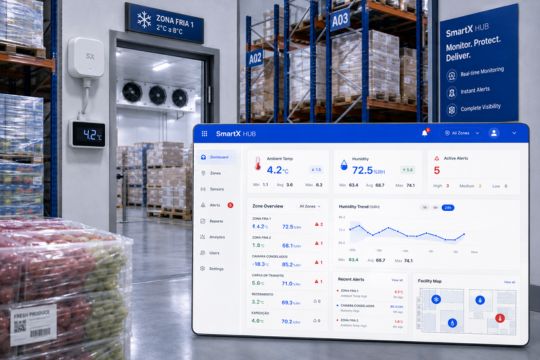
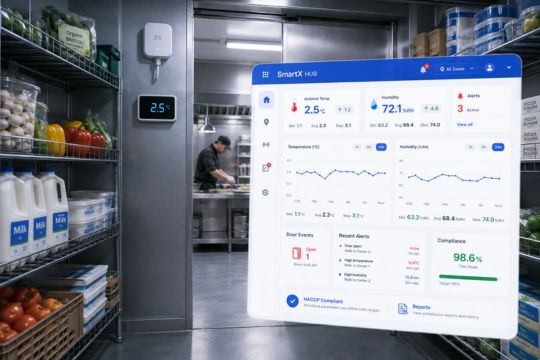
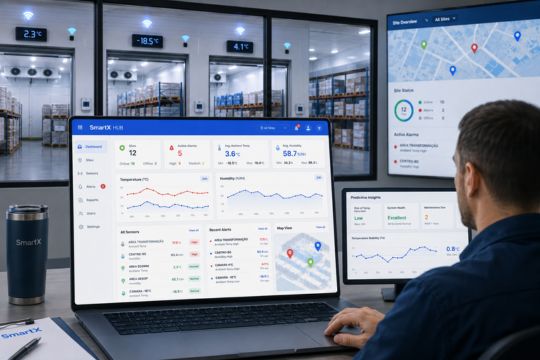
Wireless temperature and humidity loggers for cold chain and warehouse quality —
the class of device behind L’Oréal’s warehouse monitoring.
Connected worker
Wearables and badges
Worker-worn devices for location, mustering and duress, deployed in high-risk operations
including Petrobras.
Access
Facial recognition terminals
Contactless identification at gates and controlled areas, used at Swift for cold-stress
and manpower monitoring.
LoRaWAN
Gateways for wide sites
Long-range, low-power coverage for yards, distributed networks and outdoor assets where
running infrastructure is impractical.
Barcode · QR · NFC
Codes and mobile capture
The lowest-cost entry point, read from any phone — how Rio Tinto reached 90% faster
asset audits without deploying readers.
Printing
Label printing engine
A native ZPL-II builder — positioned text, QR codes, barcodes and divider lines —
alongside the thermal-printer path for Zebra and compatible devices.
Vision AI
Cameras
Vision-based identification for PPE compliance and face recognition, treated as another
identification source rather than a separate system.