What is HACCP Temperature Monitoring?
How automated temperature logging supports your Critical Control Points, replaces paper records, and keeps your food operation audit-ready at all times.
HACCP temperature monitoring is the practice of tracking and recording temperature at the Critical Control Points (CCPs) defined in your HACCP plan — automatically, continuously, and in a form that stands up to inspection. For most food operations, temperature is the single most important CCP, and the one manual methods handle worst.
HACCP — Hazard Analysis and Critical Control Points — is the internationally recognized framework for food safety. It asks operators to identify where hazards can occur, set critical limits (such as a safe temperature range), monitor those limits, and keep records proving control. Temperature monitoring sits at the heart of it.
Why manual HACCP logging fails
On paper, HACCP looks straightforward: check the temperature, write it down, act if it’s out of range. In practice, manual logging is where programs break down — not because staff don’t care, but because the method is fragile.
Gaps between checks
A reading taken three times a shift says nothing about the eight hours in between, when a unit can fail unnoticed.
Human error
Numbers get transcribed wrong, estimated, or filled in at the end of a shift from memory — and auditors know it.
No real-time action
A number on a clipboard doesn’t alert anyone. By the time a manager reviews the log, the product may already be lost.
Audit stress
When an inspector asks for six months of records, paper logs mean digging through binders and hoping nothing is missing.
How automated HACCP monitoring works
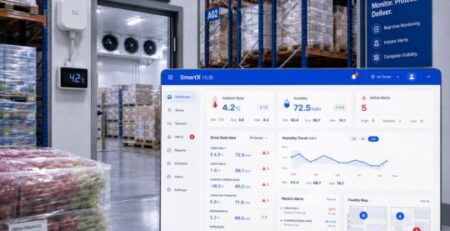
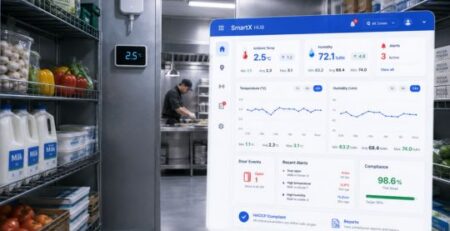
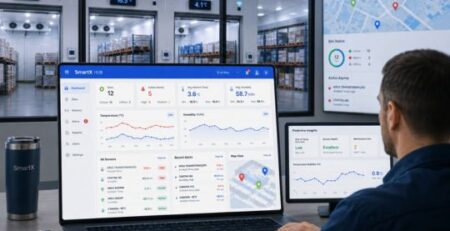
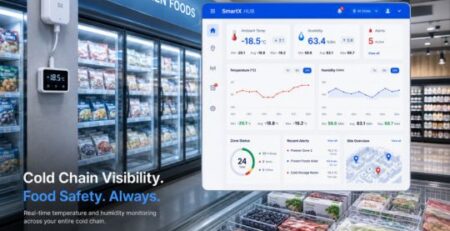
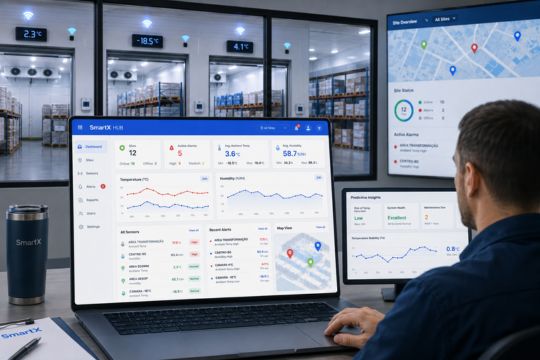
Automated temperature monitoring replaces the clipboard with continuous, sensor-based recording. Wireless sensors read temperature at each CCP around the clock and log every reading automatically — building a complete, tamper-evident history with no manual effort.
The moment a reading crosses a critical limit, the system does two things at once: it raises an alert so staff can act immediately, and it writes an auditable record of the excursion and the response. That combination — instant action plus automatic proof — is exactly what HACCP asks for and what paper can’t deliver.
From control points to defrost cycles
A capable system understands the nuances of food environments. It distinguishes a genuine excursion from a scheduled defrost, applies the right safe range to each unit, and keeps monitoring the monitoring itself:
CCP / PCC monitoring
Track every critical control point automatically, with an alert and audit record on any breach.
Defrost awareness
Scheduled defrost cycles are logged so they aren’t mistaken for real temperature excursions.
Per-unit thresholds
Each fridge, freezer or hot-hold unit gets its own safe range, so alerts are precise.
On-demand reports
Generate HACCP reports and compliance records instantly — ready for any inspection.
SmartX HUB includes a dedicated food safety and cold chain capability built around HACCP and ISO 22000 principles. It monitors your CCPs, logs every reading automatically, handles defrost cycles, and generates audit-ready reports on demand — so compliance stops being a daily chore and becomes an always-on safeguard. See the environmental monitoring solution, or read the full cold chain monitoring guide.
Make HACCP compliance automatic
Book a demo and see how SmartX HUB turns temperature monitoring into effortless, audit-ready HACCP compliance.
More Related Topics
Explore our blog for insightful articles, personal reflections and ideas that inspire action on the topics you care about.
L’ORÉAL — Warehouse Quality & Environmental Monitoring
Customer Case · Warehouse Quality & Environmental Monitoring How L'Oréal... read more