Assets Management IoT RFID 1903 663 v02 000

Localization through BLE: What Is It and How Does It Work?

Introduction

In an increasingly connected world, the ability to precisely locate assets, equipment, and people within indoor environments has become a strategic imperative across industries. While GPS dominates outdoor positioning, indoor localization presents unique challenges that demand specialized technology solutions. Enter Bluetooth Low Energy (BLE)---a wireless communication protocol that has evolved from simple device connectivity to become one of the most versatile and cost-effective technologies for Real-Time Location Systems (RTLS).

First introduced in 2010, BLE has transformed from a power-efficient alternative to classic Bluetooth into a sophisticated positioning technology capable of sub-meter accuracy. When integrated with intelligent software platforms like SmartX HUB, BLE-based RTLS enables organizations to create digital twins of physical environments, track assets in real-time, and optimize operations with unprecedented precision.

Understanding Bluetooth Low Energy Technology

Bluetooth Low Energy represents a fundamental reimagining of Bluetooth technology, engineered specifically for ultra-low power consumption while maintaining robust wireless communication capabilities. While traditional Bluetooth was designed for continuous data streaming — ideal for wireless headphones or speakers — BLE was architected for intermittent data transmission, making it ideal for IoT devices and location-tracking applications.

Key Characteristics That Make BLE Ideal for RTLS

Several unique attributes position BLE as a leading technology for indoor positioning systems:

Exceptional Energy Efficiency

BLE devices consume minimal power, enabling battery life of 2-4 years on a single coin cell. This longevity eliminates the need for frequent maintenance cycles and makes large-scale deployments economically viable. For organizations tracking thousands of assets, this energy efficiency translates directly into reduced operational costs and minimal infrastructure overhead.

Universal Device Compatibility

As a globally standardized protocol maintained by the Bluetooth Special Interest Group, BLE enjoys ubiquitous support across smartphones, tablets, wearables, and IoT devices. This extensive ecosystem ensures interoperability and provides access to a vast marketplace of compatible hardware from numerous manufacturers, offering flexibility in device selection and competitive pricing.

Robust Signal Reliability

BLE operates in the 2.4 GHz ISM band using frequency hopping to minimize interference. The protocol demonstrates exceptional resilience in complex industrial environments—including metal-rich factories, concrete-heavy healthcare facilities, and electromagnetically noisy manufacturing plants. This reliability ensures consistent location data even in challenging RF conditions.

Scalability and Flexibility

BLE-based RTLS scales seamlessly from small pilot deployments to enterprise-wide implementations tracking tens of thousands of assets. The technology accommodates diverse accuracy requirements — from room-level positioning (5-10 meters) for basic tracking to sub-meter precision for critical asset management — all within the same infrastructure.

How BLE-Based RTLS Works: System Architecture

Real-Time Location Systems using BLE technology comprise three fundamental components working in concert to deliver accurate position data:

1. BLE Tags (Transmitters)

Tags are compact BLE transmitters attached to assets, equipment, or worn by personnel. These devices periodically broadcast BLE advertising packets containing a unique identifier and signal strength information. Tags come in various form factors—adhesive labels for equipment, rugged enclosures for harsh environments, ID badges for personnel, and wearable bracelets for patients or workers. Modern BLE tags measure just millimeters in size while delivering multi-year battery life, making them virtually invisible in operational environments.

2. BLE Receivers (Antennas/Gateways)

Fixed receivers installed throughout the monitored space detect BLE signals from nearby tags. These devices connect to the facility network via Ethernet or WiFi and relay signal data to the positioning software. Receiver placement follows a carefully designed deployment plan based on desired accuracy, facility layout, and environmental characteristics. Depending on the localization technique employed, receiver density and positioning requirements vary significantly—from one receiver per 100-200 square meters for basic proximity detection to denser deployments for high-precision applications.

3. Localization Software Platform

The software platform receives raw signal data from receivers and processes it using sophisticated algorithms to calculate tag positions. This positioning engine can run on edge servers within the facility for low-latency applications or in the cloud for scalability and remote management. The calculated locations are then delivered to application platforms like SmartX HUB, which transform raw position data into actionable business intelligence—asset tracking dashboards, workflow optimization analytics, safety monitoring systems, and automated alerts.

BLE Localization Techniques: From Basic to Precision

BLE RTLS deployments employ different positioning methodologies depending on accuracy requirements, infrastructure constraints, and application needs. The two primary techniques represent distinct approaches to location calculation:

Received Signal Strength Indicator (RSSI)

RSSI-based positioning leverages the principle that radio signal strength decreases predictably with distance. Receivers measure the power of incoming BLE signals and use this data to estimate the distance to each tag. By combining distance measurements from multiple receivers, trilateration algorithms calculate the tag’s two-dimensional position.

RSSI Characteristics:

  • Low hardware complexity: Standard BLE receivers without specialized components
  • Minimum three receivers required: Trilateration demands at least three distance measurements for 2D positioning
  • Typical accuracy: 3-5 meters in optimal conditions, degrading in complex environments
  • Cost-effective deployment: Lower hardware costs make RSSI ideal for large-scale implementations where room-level accuracy suffices
  • Environmental sensitivity: Signal reflections and multipath effects can impact accuracy in metal-rich or electromagnetically complex spaces

RSSI positioning excels in applications that require zone-level tracking — such as warehouse bay identification, department-level hospital asset tracking, or retail store heat mapping. The technology provides sufficient accuracy for workflow optimization, inventory management, and basic asset visibility while maintaining low implementation costs.

Angle of Arrival (AoA)

Angle of Arrival represents a more sophisticated approach that measures the direction from which BLE signals arrive at the receiver. Using an antenna array, AoA-capable receivers detect the phase difference of incoming signals across multiple antenna elements, calculating the three-dimensional angle of arrival with high precision. This directional information enables accurate positioning with reduced infrastructure density.

AoA Characteristics:

  • Specialized hardware: Antenna arrays and advanced signal processing capabilities required
  • Single anchor positioning: One AoA receiver can locate tags within its coverage cone, reducing infrastructure requirements
  • Superior accuracy: 0.5-1 meter precision achievable even in challenging RF environments
  • Multipath resistance: Angular measurements prove more robust against signal reflections than RSSI
  • Extended coverage: Height-dependent coverage areas—higher installations provide broader tracking zones
  • Higher initial investment: Advanced receiver hardware increases upfront costs but may reduce total cost of ownership through lower infrastructure density

AoA positioning suits applications that demand precise asset locations — surgical equipment tracking in operating rooms, high-value inventory management, tool tracking in manufacturing, or safety-critical personnel monitoring. The sub-meter accuracy enables use cases that are impossible with RSSI-based systems, while maintaining the energy efficiency and scalability advantages of BLE technology.

SmartX HUB: Transforming BLE Location Data into Business Value

Raw location coordinates hold limited value without intelligent software to contextualize and operationalize this data. SmartX HUB serves as the application layer that transforms BLE positioning technology into comprehensive business solutions. Our platform ingests real-time location data from BLE RTLS infrastructure and delivers industry-specific applications that drive measurable ROI.

SmartX HUB capabilities include:

  • Real-time asset tracking: Visualize equipment locations on facility maps with search, filtering, and historical playback
  • Geofencing and alerting: Automated notifications when assets enter/exit designated zones or move unexpectedly
  • Utilization analytics: Data-driven insights into asset usage patterns, idle time, and deployment efficiency
  • Workflow optimization: Process mapping and bottleneck identification through movement pattern analysis
  • Compliance documentation: Automated audit trails and reporting for regulatory requirements
  • Integration framework: APIs for connecting location data with ERP, CMMS, EMR, and other enterprise systems
  • Multi-site management: Centralized visibility across multiple facilities with role-based access control

Industry Applications: BLE RTLS in Action

The versatility of BLE technology, combined with SmartX HUB’s intelligent platform, enables transformative applications across diverse industries:

Manufacturing and Industry 4.0

  • Tool and equipment tracking: Eliminate time wasted searching for tools, reduce duplicate purchases, optimize tool crib operations
  • Work-in-progress monitoring: Track materials and components through production processes for real-time visibility
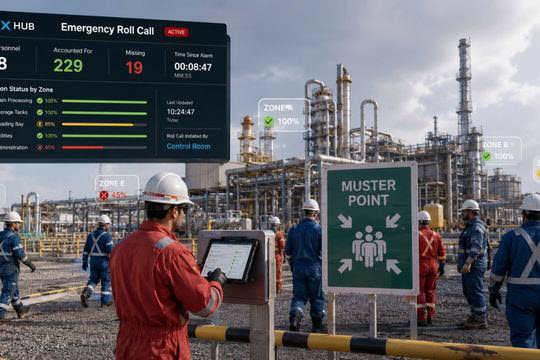
  • Collision avoidance: Safety systems that prevent accidents between personnel, vehicles, and machinery
  • Process optimization: Identify bottlenecks and inefficiencies through movement pattern analysis
  • Access control: Restrict personnel movement to authorized zones based on credentials and certifications
  • Warehouse management: Optimize picking routes, verify put-away locations, and manage inventory in real-time

Healthcare Facilities

  • Medical equipment tracking: Locate IV pumps, wheelchairs, ventilators, and diagnostic equipment instantly
  • Automated inventory management: Real-time visibility into equipment location and availability
  • Maintenance optimization: Usage-based maintenance scheduling and compliance documentation
  • Patient safety monitoring: Wandering prevention for dementia, Alzheimer’s, or psychiatric patients
  • Workflow digitization: Track patient flow, staff movements, and equipment utilization for process improvement
  • Environmental services optimization: Data-driven cleaning schedules based on actual space utilization

Retail and Hospitality

  • Customer journey mapping: Understand in-store behavior patterns and dwell times
  • POS integration: Correlate purchase data with customer movement patterns for merchandising optimization
  • Queue management: Monitor line lengths in real-time and optimize staffing allocation
  • Location-based services: Trigger personalized promotions or information based on customer location
  • Asset protection: Track high-value merchandise and receive alerts for unauthorized movement

Strategic Benefits of BLE-Based RTLS

Organizations implementing BLE RTLS with SmartX HUB report substantial and measurable improvements across multiple operational dimensions:

Cost Optimization

Reduce equipment over-procurement by 20-30% through accurate utilization visibility. Eliminate losses from misplaced or stolen assets. Lower labor costs by reducing time spent searching for equipment. Optimize maintenance spending through usage-based scheduling rather than time-based intervals.

Operational Efficiency

Increase asset utilization rates by 40-60% through better distribution and availability. Reduce equipment search time from 30 minutes to under 3 minutes. Optimize workflows by identifying and eliminating bottlenecks. Improve resource allocation through data-driven decision making.

Compliance and Risk Management

Automated documentation for regulatory audits and compliance reporting. Complete audit trails for equipment location and maintenance history. Enhanced safety through geofencing, access control, and emergency response capabilities. Reduced liability exposure through improved asset accountability.

Scalability and Future-Proofing

Start small with pilot deployments and expand incrementally across the enterprise. Leverage the existing BLE ecosystem for hardware diversity and competitive pricing. Add new applications and use cases without infrastructure replacement. Integration readiness for emerging IoT and Industry 4.0 initiatives.

Implementation Considerations

Successful BLE RTLS deployment requires careful planning and expertise. SmartX Technology brings 8+ years of experience implementing location intelligence solutions for Fortune 500 clients across manufacturing, healthcare, construction, and oil & gas sectors. Our implementation methodology addresses critical success factors:

  • Site surveys and RF analysis: Comprehensive facility assessment to optimize receiver placement
  • Technology selection: Match positioning technique (RSSI vs AoA) to accuracy requirements and budget
  • Pilot validation: Prove ROI in controlled deployment before enterprise rollout
  • Integration planning: Ensure seamless connectivity with existing enterprise systems
  • Change management: Train users and stakeholders on new workflows and capabilities
  • Continuous optimization: Monitor performance and refine deployment based on operational data

The Future of Indoor Positioning

Bluetooth Low Energy has evolved from a niche wireless protocol to a foundational technology enabling the digital transformation of physical operations. The combination of energy efficiency, universal device support, flexible accuracy options, and cost-effective deployment positions BLE as the dominant indoor positioning technology across industries.

As markets increasingly demand indoor location services—projected to grow at over 30% CAGR through 2028—organizations that implement BLE RTLS gain significant competitive advantages through improved asset visibility, operational efficiency, and data-driven decision making. SmartX HUB transforms this technological capability into business value, delivering industry-specific applications that drive measurable ROI.

The question for forward-thinking organizations is no longer whether to implement indoor positioning technology, but how quickly they can deploy BLE RTLS to capture the operational and financial benefits of real-time asset intelligence. With proven technology, extensive hardware ecosystems, and sophisticated application platforms like SmartX HUB, the path to location intelligence has never been clearer.

More Related Topics

Explore our blog for insightful articles, personal reflections and ideas that inspire action on the topics you care about.